CPOCanada Peace Observatory

About the Observatory

The Canada Peace Observatory (CPO) is an initiative of the Conflict and Resilience Research Institute Canada (CRRIC) to document, monitor, verify and analyse conflict, hate incidents, violence, social tensions, community safety concerns and emerging peace and security issues across Canada. It exists so that policymakers, researchers, journalists and communities can work from a verified record rather than from impressions.

The Observatory publishes individual incident records with their sources, keeps a clear line between what has been alleged, what CRRIC has verified and what police or a court have found, and reports official statistics alongside its own record without ever merging the two. How it does this is set out in the methodology, the verification levels and the ethics commitments.

Director

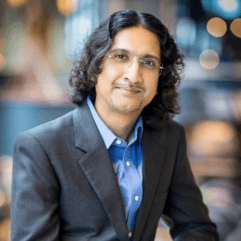
Dr. Kawser Ahmed

Dr. Kawser Ahmed

Executive Director, CRRIC

Dr. Kawser Ahmed is the Executive Director of the Conflict and Resilience Research Institute Canada and an Adjunct Professor of Political Science at the University of Winnipeg. Under his leadership, CRRIC has undertaken a range of research and community-focused initiatives addressing issues related to conflict, peacebuilding, diaspora communities, and public safety.

Dr. Ahmed completed his SSHRC Postdoctoral Fellowship at the University of Winnipeg in 2020. His professional experience includes serving as an exchange officer with the Turkish Armed Forces, working as an observer with the United Nations Mission for the Referendum in Western Sahara (MINURSO), and participating in programs at the Near East South Asia Center for Strategic Studies (NESA) in Washington, D.C.

He holds an MPhil in Peace and Conflict Studies from the University of Dhaka and a PhD from the University of Manitoba. His research interests include social conflict and peacebuilding, radicalism, violent extremism, and United Nations peacekeeping operations.

Research Lead

Arshdeep Singh

Arshdeep Singh

Research Lead

Arshdeep Singh is a Research Intern at the Conflict and Resilience Research Institute Canada (CRRIC) and a graduate of the Joint Master of Peace and Conflict Studies program offered by the University of Manitoba and the University of Winnipeg through the Mauro Institute for Peace & Justice. He holds a Bachelor of Laws (2022) and a Bachelor of Arts (2020) from Punjabi University, Patiala, India. During his graduate studies, he received the International Graduate Student Entrance Scholarship (IGSES) and the Mr. Harold Buchwald, CM, QC Graduate Scholarship in Peace and Conflict Studies.

His academic and research work focuses on conflict, human rights, social justice, and the socioeconomic consequences of political and structural inequalities. He has research experience in both qualitative and quantitative methods, including examining the human toll of conflicts and natural disasters, rural livelihoods, agricultural labour, and the experiences of marginalized communities. He has authored and co-authored multiple academic publications and co-authored a forthcoming book chapter with Dr. Kawser Ahmed on foreign intervention and transnational repression in Canada, with a particular focus on the Sikh diaspora.

His work also draws on years of grassroots engagement with student, farmer, and agricultural labour movements in India, where he contributed to community advocacy, field-based research, and initiatives promoting education and social justice.

Advisory Network

Dr. Mary Shariff

Dr. Mary Shariff

Professor, Faculty of Law, University of Manitoba

Dr. Mary Shariff is a Professor in the Faculty of Law at the University of Manitoba, where she serves as Associate Dean (Graduate Studies) and Director of the Master of Human Rights program. With extensive experience in legal scholarship, teaching, and academic leadership, her work bridges law, human rights, ethics, and social policy.

She holds a PhD and an LLM from Trinity College Dublin, an LLB from the University of Manitoba, and a BSc from the University of Winnipeg. Her research interests span human rights, disability rights, aging, end-of-life decision-making, bioethics, environmental and natural resources law, and legal research methodologies. Her scholarship also examines the legal and ethical dimensions of emerging social challenges, including healthcare decision-making, human dignity, and autonomy.

Dr. Shariff’s academic contributions have been recognized through multiple research grants, teaching awards, and distinctions for scholarly achievement. Her research has also involved interdisciplinary collaboration on issues such as vaccination decision-making in personal care homes and the legal implications of aging and mortality. Through her research, teaching, and academic leadership, she contributes to advancing legal education and interdisciplinary scholarship at the intersection of law, human rights, ethics, and social justice.

Dr. Saad Ahmad Khan

Dr. Saad Ahmad Khan

Instructor and Chair, Joint Master’s Program in Peace and Conflict Studies

Dr. Saad Ahmad Khan is an academic, international human rights lawyer, and Chair of the Joint Master’s Program in Peace and Conflict Studies at the University of Manitoba and the University of Winnipeg. A member of the Global College community since 2014, his work brings together human rights, international law, peacebuilding, and the study of contemporary social and political conflicts.

His research examines the factors contributing to the radicalization of second-generation immigrants, particularly within multicultural societies such as Canada. His broader scholarly interests include international and counter-terrorism law, international criminal law, immigrant resettlement, post-conflict reconstruction, and civil liberties in politically polarized societies. He is the author of a book examining ethnicity, religion, and radicalization among second-generation Pakistani Canadians and has published research on identity conflicts, colonialism, peacebuilding, and experiential human rights education.

In addition to his research and academic leadership, Dr. Khan is committed to inclusive, experiential, and student-centred teaching. His contributions to graduate education were recognized with a 2025–26 Teaching Award from the University of Manitoba Graduate and Postdoctoral Society. Through his teaching, scholarship, and leadership in peace and conflict studies, he contributes to advancing critical inquiry into human rights, conflict transformation, and the challenges of building peaceful and inclusive societies.

Belle Jarniewski

Belle Jarniewski

Executive Director, Jewish Heritage Centre of Western Canada

Belle Jarniewski is an educator, Holocaust scholar, and interfaith advocate who has dedicated much of her career to Holocaust education, combating antisemitism, preserving historical memory, and fostering dialogue among religious and cultural communities. As Executive Director of the Jewish Heritage Centre of Western Canada, she leads efforts to preserve and share the history, experiences, and cultural heritage of Jewish communities, while promoting education and understanding among future generations.

Drawing on her family’s experiences as Holocaust survivors, Jarniewski has made significant contributions to documenting and preserving survivor testimonies. She authored Voices of Winnipeg Holocaust Survivors (2010), documenting the experiences of 73 local survivors and helping ensure their stories remain accessible to students, researchers, and the wider public. Her work also extends to Holocaust education initiatives across Manitoba and international efforts to address antisemitism and Holocaust denial.

Jarniewski holds degrees in education, translation, and theology, including a Master of Arts in Theology from the University of Winnipeg. She has served in leadership roles within multifaith organizations, co-founded interfaith dialogue initiatives, and participated in international efforts to combat antisemitism through the International Holocaust Remembrance Alliance. Her broader work reflects a sustained commitment to historical remembrance, interfaith cooperation, human dignity, and the pursuit of a more inclusive and just society.

Independence

The Observatory documents incidents regardless of who the parties are and does not adjust the record to suit any government, funder or community organisation.

Using the data

Published records are open as JSON and CSV, limited to the approved public fields. Researchers wanting a tailored extract can contact us.